
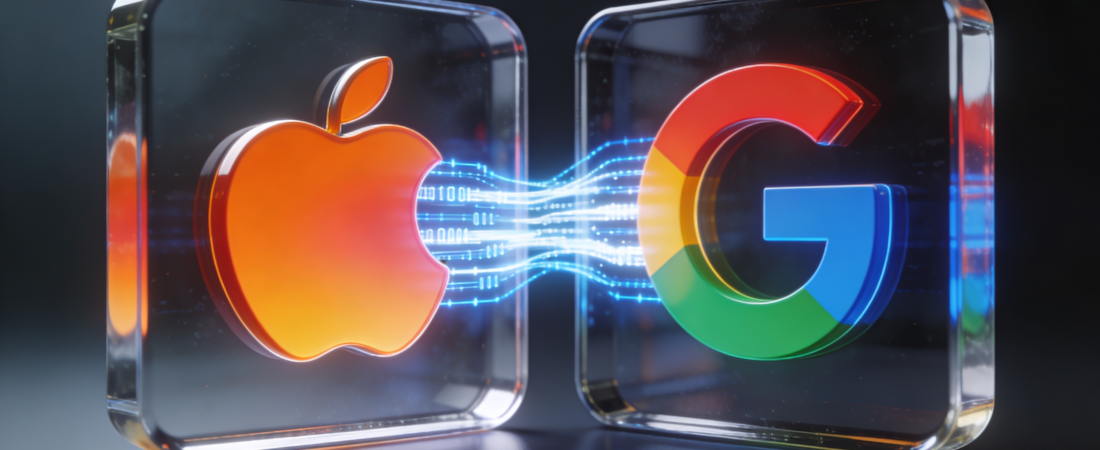
In a move that would have seemed impossible just a year ago, Apple is reportedly set to unveil a Gemini-powered version of Siri in February 2026. Yes, you read that right, Apple, the company known for building everything in-house and maintaining an iron grip on its ecosystem, is partnering with Google to supercharge its voice assistant.
For context, this is the same Apple that spent years refusing to integrate Google Maps back into iOS after their disastrous Apple Maps launch. The same Apple that positions privacy as a competitive advantage against Google’s data-hungry business model. And now they’re letting Google’s AI models power one of the most intimate features on your iPhone?
Something big is happening here, and it’s not just about making Siri less terrible at answering questions.
Why Apple Had to Make This Move
Let’s be honest, Siri has been a punchline for years. While Google Assistant and Alexa evolved into genuinely useful tools, Siri remained stubbornly mediocre. Set a timer? Sure. Answer a complex question or help with actual tasks? Good luck.
The problem wasn’t just that Siri couldn’t compete. It’s that the AI revolution completely passed Apple by. While OpenAI launched ChatGPT, Google rolled out Gemini, and Microsoft integrated AI across its entire product line, Apple was… working on a $3,500 VR headset that most people can’t afford.
According to the TechCrunch report, Apple’s new Gemini-powered Siri will use Google’s models and user data to complete complex tasks. This isn’t a minor update, this is Apple admitting they’re years behind in AI and need outside help to catch up.
For a company that prides itself on vertical integration and owning the full stack, this is a massive strategic shift. It’s like seeing Ferrari suddenly using Honda engines because they can’t build fast enough ones themselves.
The Privacy Paradox
Here’s where it gets interesting, and honestly a bit concerning. Apple has built its entire brand around privacy. “What happens on your iPhone stays on your iPhone” has been their rallying cry against Google and Meta’s surveillance capitalism.
But now they’re sending your Siri queries, which include everything from calendar appointments to location data to personal questions, to Google’s servers. How does that square with Apple’s privacy promises?
The technical details aren’t fully clear yet, but this partnership raises serious questions:
- Will Apple process queries on-device first, only sending complex ones to Google?
- What data will Google be able to collect and use?
- Will users be able to opt out of the Google-powered version?
- How will this affect Apple’s privacy marketing going forward?
- Will Google grant Apple specific privileges, like enterprises utilizing their suite with AI, to not track or learn from the data sent to them via the partnership?
My guess? Apple will implement some kind of privacy-preserving framework, maybe anonymizing queries or using differential privacy techniques. But make no mistake: sending data to Google’s AI is fundamentally different from Apple’s previous privacy stance.
What This Means for Marketers and Content Creators
If you’re in marketing or content creation, this partnership matters more than you might think. Here’s why:
1. Search behavior is about to change. When Siri gets dramatically better, more iPhone users will default to voice queries instead of typing into Google Search. That means traditional SEO strategies need to account for conversational, voice-first queries.
2. Google gets unprecedented access to iOS data. Right now, Google knows what Android users search for, but Apple users have been a black box. This partnership gives Google insights into how hundreds of millions of iPhone users interact with AI assistants.
3. The AI assistant race just got more competitive. If Apple+Google can create a truly intelligent Siri, it puts pressure on Amazon’s Alexa, Microsoft’s Copilot, and every other assistant to level up. That’s good for innovation but means the landscape will keep shifting rapidly.
The Bigger Picture: Apple’s AI Strategy (or Lack Thereof)
This partnership reveals something uncomfortable about Apple’s position in the AI era. Despite being one of the most valuable companies in the world, they’ve been playing catch-up in AI for years.
They acquired numerous AI startups. They hired top researchers. They built custom silicon optimized for machine learning. And yet, they couldn’t build an AI assistant competitive with what Google and OpenAI were shipping.
The Gemini partnership is Apple essentially admitting: “We can’t build this ourselves fast enough.” It’s a pragmatic move, but it’s also a sign of weakness.
What’s particularly interesting is the timing. Apple is unveiling this in February 2026, which suggests they’ve been working on integration for months. This isn’t a last-minute decision, this is a calculated strategic pivot that was probably debated endlessly in Cupertino boardrooms.
What Happens Next?
Here’s what I’m watching for when Apple unveils this in February:
Privacy protections: Apple will need to explain how they’re maintaining privacy while using Google’s AI. If they can’t make a convincing case, it undermines years of privacy-focused marketing.
Feature set: Will Gemini-powered Siri finally be able to do complex, multi-step tasks? Can it integrate with apps and actually be useful? Or is this just a smarter version of the same limited assistant?
OpenAI’s response: Remember, Apple was also in talks with OpenAI about integrating ChatGPT into iOS. Did those talks fall through? Is there bad blood? OpenAI can’t be happy seeing their main competitor get this deal.
Developer implications: If Siri gets dramatically better, it could finally become a viable platform for third-party integrations. That opens up opportunities for developers and marketers to create Siri-native experiences.
My Take: Pragmatic but Risky
As someone who’s used Siri since the iPhone 4S, I’m cautiously optimistic. Siri desperately needs an upgrade, and Google’s Gemini is genuinely impressive these days. If Apple can pull off this integration while maintaining some semblance of privacy protection, iPhone users will benefit enormously.
But I’m also skeptical. Apple has a history of overpromising on AI features and underdelivering. Remember when they showed off complex Siri shortcuts that barely anyone uses? Or when Apple Intelligence was supposed to revolutionize iOS but ended up being just okay?
The partnership with Google solves Apple’s AI capability problem, but it creates a dependency on a major competitor. What happens if Google raises prices? What if Google uses the data to gain competitive advantages? What if the partnership falls apart?
For marketers and creators, the key takeaway is this: the voice assistant landscape is about to get way more interesting. If you’re not thinking about voice search optimization and conversational AI in your content strategy, February 2026 is your wake-up call.
Apple finally realized they can’t win the AI race alone. Whether this partnership is brilliant pragmatism or a strategic mistake remains to be seen. But one thing’s certain: new Siri better be really, really good when it launches, because Apple just bet their reputation on Google’s technology.
TL;DR
- Apple is partnering with Google to power Siri with Gemini AI, marking a massive strategic shift for a company that usually builds everything in-house
- This move reveals Apple is years behind in AI development and couldn’t build a competitive assistant on their own
- The privacy implications are significant. Apple’s sending user data to Google despite years of privacy-focused marketing
- For marketers, this means voice search optimization becomes even more critical as Siri becomes more capable
- The February 2026 unveiling will show whether Apple can maintain privacy promises while using Google’s AI
FAQ
Why is Apple partnering with Google instead of building their own AI?
Apple has been investing heavily in AI but hasn’t been able to match the capabilities of Google’s Gemini or OpenAI’s models. Rather than wait years to catch up, they’re taking a pragmatic approach by licensing best-in-class technology. It’s an admission they’re behind, but also shows they’re willing to set aside pride to deliver better features to users.
How will this affect Apple’s privacy promises?
This is the million-dollar question. Apple has built their brand on privacy, so sending Siri queries to Google’s servers seems contradictory. Apple will likely implement privacy-preserving techniques like anonymization or on-device processing for sensitive queries. We’ll know more when they unveil the full details in February, but expect Apple to emphasize privacy protections heavily.
When will the new Gemini-powered Siri be available?
Apple plans to unveil the new Siri in February 2026, but the actual rollout to users will likely happen later, possibly with iOS 18.3 or iOS 18.4. Apple typically announces features months before they’re widely available, and AI integrations require extensive testing and regional rollouts.
Will this make Siri as good as ChatGPT or Google Assistant?
Potentially, yes. Gemini is Google’s most advanced AI model and competes directly with GPT-4. If Apple successfully integrates it with deep iOS system access, Siri could finally become the intelligent assistant Apple always promised. However, Apple has a history of overpromising on AI features, so temper expectations until we see it in action.
What does this mean for the Apple-OpenAI relationship?
Apple was reportedly in talks with OpenAI about similar integrations. The fact that they went with Google instead suggests either the OpenAI deal fell through, terms weren’t favorable, or Apple preferred Google’s approach. It’s worth watching whether Apple maintains any relationship with OpenAI or if this Gemini partnership is exclusive.