
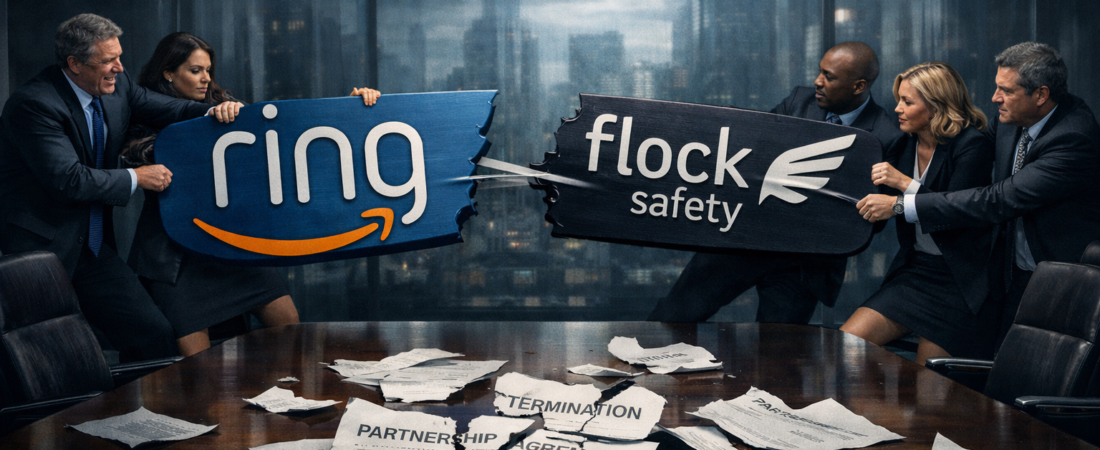
When Amazon’s Ring announced it was ending its partnership with Flock Safety this week, both companies called it a “mutual decision.” That’s corporate speak for “this blew up in our faces and we’re doing damage control.”
The partnership, which integrated Ring’s doorbell and security camera network with Flock Safety’s automated license plate readers, had been live for less than a year. The idea seemed straightforward on paper: combine Ring’s massive installed base of consumer cameras with Flock Safety’s law enforcement-focused surveillance infrastructure to help solve crimes. In practice, it became a privacy nightmare that perfectly illustrates why surveillance technology and consumer smart home devices should probably stay in separate lanes.
What Ring’s Search Party Actually Did
Ring’s “Search Party” feature was the centerpiece of this partnership. Here’s how it worked: if you owned a Ring doorbell or security camera, you could theoretically help law enforcement find missing persons or locate stolen vehicles by allowing your camera footage to be searched for specific people or license plates.
Sounds helpful, right? The problem was in the details.
Flock Safety operates a network of automated license plate readers (ALPRs), cameras mounted on poles throughout neighborhoods that capture and log every vehicle that passes by. Police departments use this data to track vehicle movements, identify patterns, and build cases. By integrating Ring’s consumer cameras into this system, the partnership effectively deputized millions of doorbell cameras into a distributed surveillance network.
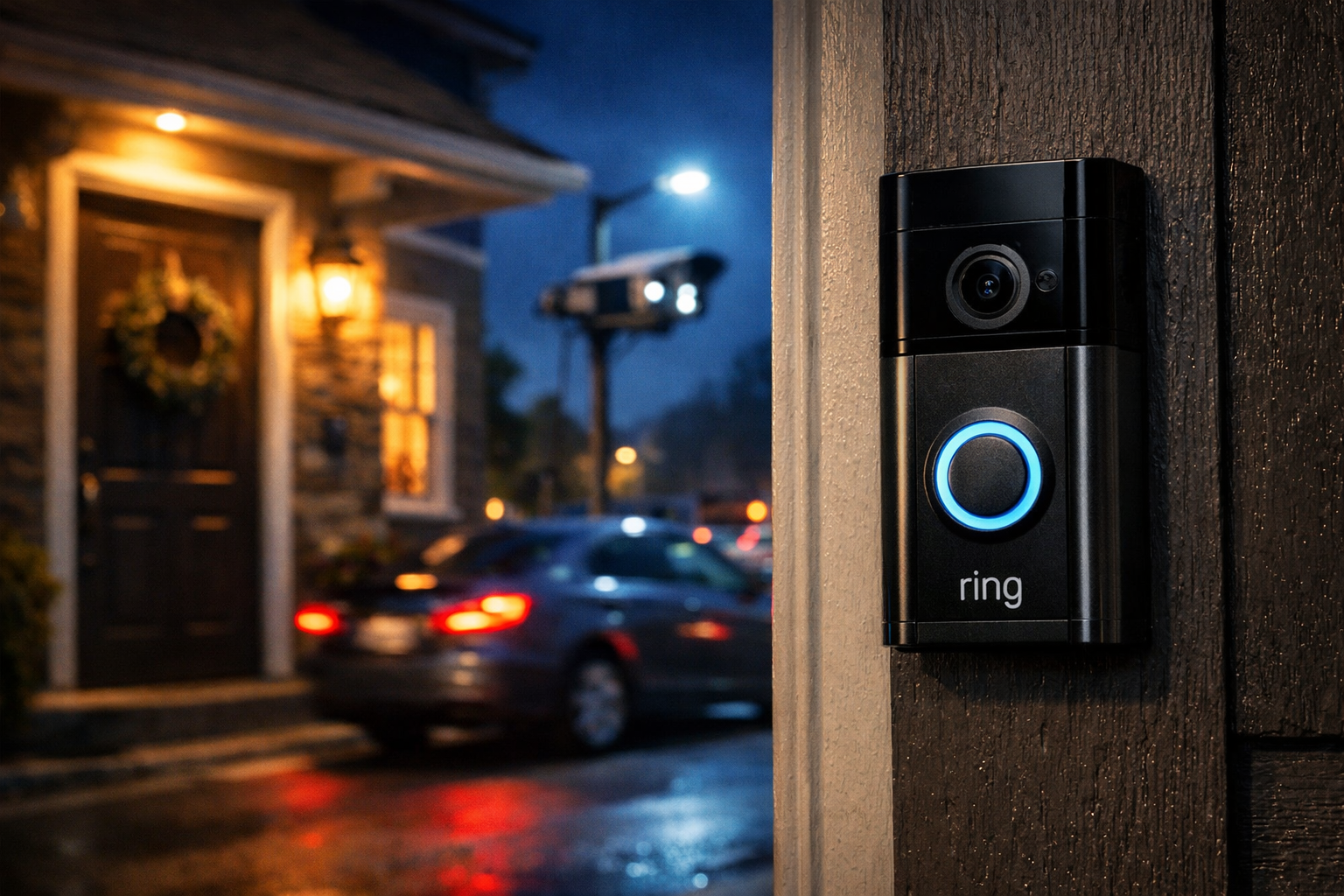
The feature was opt-in, meaning Ring owners had to actively enable it. But privacy advocates immediately raised red flags about mission creep, the gradual expansion of surveillance capabilities beyond their original purpose. If Ring could search for stolen vehicles today, what stops them from searching for people at protests tomorrow? Or tracking individuals without warrants? Or building movement profiles on anyone who walks past a Ring camera?
Those aren’t hypothetical concerns. They’re the exact trajectory of surveillance technology over the past two decades.
Why This Partnership Was Doomed From the Start
Ring has a long, complicated history with privacy and law enforcement. The company has previously faced criticism for its cozy relationship with police departments, including providing officers with talking points to encourage Ring adoption and sharing footage without user consent in “emergency” situations.
Adding Flock Safety to the mix amplified these concerns exponentially. Flock Safety’s entire business model is built around selling surveillance-as-a-service to law enforcement. Their cameras are designed to capture data continuously and make it searchable retroactively, the digital equivalent of having a police officer with perfect memory stationed on every street corner.
Combining that infrastructure with Ring’s consumer-facing brand created an identity crisis. Is Ring a smart home security company helping homeowners protect their property? Or is it a surveillance company helping law enforcement monitor public spaces? You can’t convincingly be both.
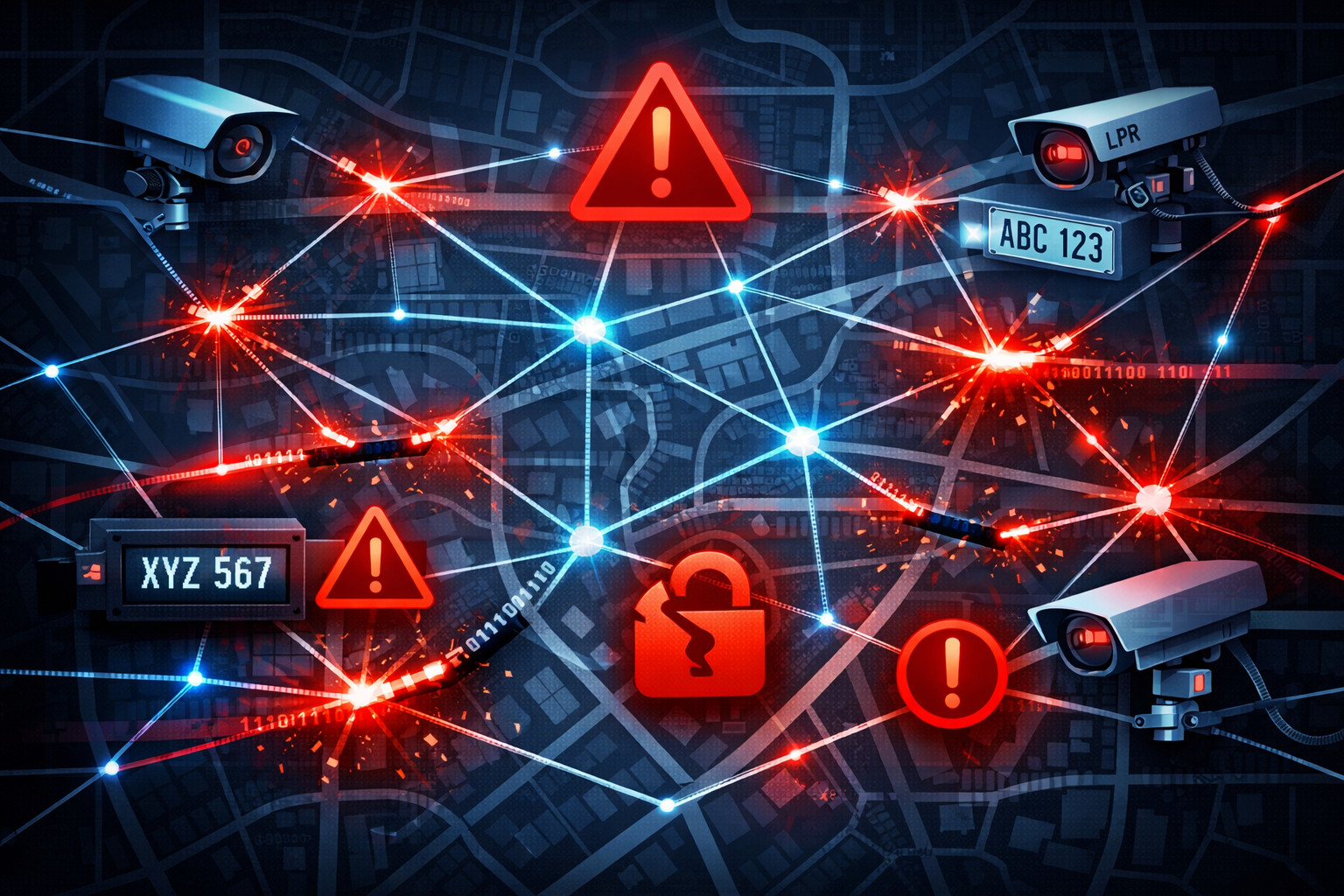
Privacy groups including the Electronic Frontier Foundation (EFF) and the American Civil Liberties Union (ACLU) immediately pushed back. Their argument: Ring was normalizing mass surveillance by making it seem like a neighborly feature rather than a fundamental shift in how law enforcement accesses data about people’s movements and activities.
The Backlash Was Swift and Public
Ring users weren’t thrilled either. Social media filled with complaints from customers who felt betrayed that their doorbell camera, purchased to see who was at the door, was now potentially part of a law enforcement surveillance network.
The optics were terrible. Ring’s marketing emphasizes home security and peace of mind. Search Party’s marketing basically said “turn your home into part of a police surveillance grid.” Those messages don’t mix well.
Amazon, which acquired Ring in 2018 for over $1 billion, found itself defending a feature that contradicted the company’s broader messaging around customer privacy and data protection. While Amazon has its own complicated history with data collection, the company has been trying to position itself as more privacy-conscious in response to increasing regulatory pressure.
Having Ring actively partner with a surveillance company undercut that narrative spectacularly.
What Flock Safety’s Side of This Story Reveals
Flock Safety’s business has exploded over the past few years. The company’s automated license plate readers are now deployed in thousands of neighborhoods across the U.S., often funded by homeowners associations or local governments promising to reduce crime.
The data Flock Safety collects is staggering. Every vehicle passing a Flock camera gets logged with timestamp, location, and license plate number. That data is stored for 30 days and searchable by law enforcement. In some jurisdictions, that means police can retroactively track someone’s movements without a warrant, simply by querying Flock’s database.
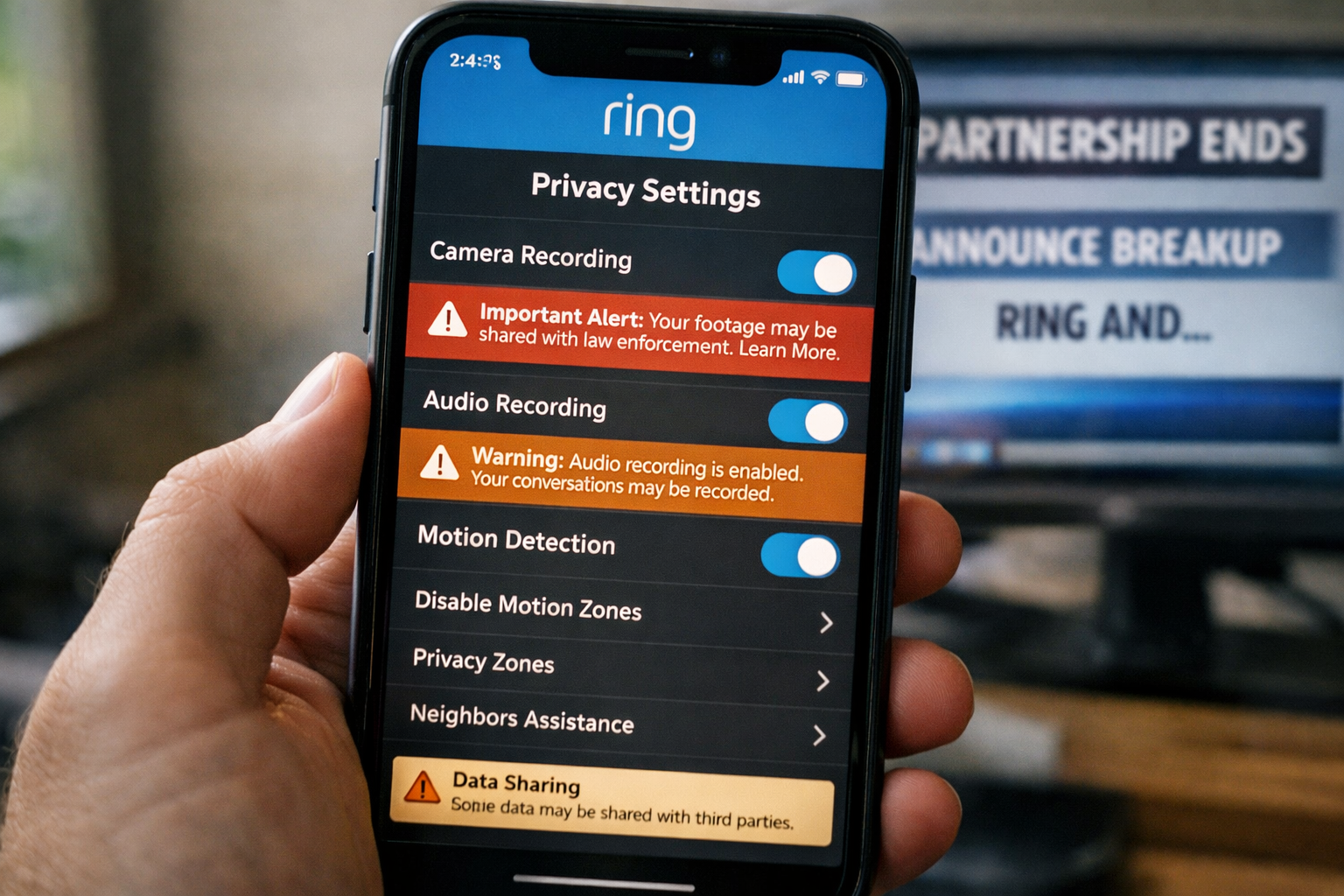
Civil liberties groups have raised concerns about this for years. The Ring partnership was Flock Safety’s attempt to expand beyond fixed pole-mounted cameras into the much larger market of consumer-installed devices. If successful, it would have created a surveillance network orders of magnitude larger than anything law enforcement had access to previously.
That ambition is precisely what made privacy advocates nervous, and what ultimately killed the partnership.
The Broader Context: Smart Home Privacy Is Getting Messier
This isn’t just about Ring and Flock Safety. It’s about a fundamental tension in how smart home devices collect and use data.
When you buy a Ring doorbell, you’re thinking about package theft and seeing who’s at your door. You’re probably not thinking about law enforcement access, data retention policies, or whether your camera footage might be used to identify protesters or track activists.
But that data exists, and once it exists, it becomes a target for access requests from law enforcement, civil litigation, and increasingly sophisticated hacking attempts. Every smart home device that records video or audio is simultaneously a convenience tool and a potential surveillance liability.
Ring’s competitors, Google Nest, Arlo, Eufy, have all faced similar privacy questions. The difference is they haven’t (yet) tried to explicitly partner with law enforcement surveillance companies. Ring did, and the backlash was immediate and fierce.
What This Means for Ring Users
If you own a Ring device, here’s what actually changes: Search Party is being shut down. You no longer have the option to integrate your camera with Flock Safety’s network, whether you wanted to or not.
But the underlying issues haven’t changed. Ring still cooperates with law enforcement requests for footage. The company still has the technical capability to access your camera feeds. And Amazon still collects data about when your cameras are active, what they’re recording, and how you use the Ring app.
If privacy is your primary concern, the Search Party shutdown doesn’t fundamentally change Ring’s relationship with law enforcement or data collection practices. It just removes one particularly visible and controversial feature.
For people considering buying a Ring device, this episode is a useful reminder to read the privacy policy carefully and understand what data you’re generating and who might access it. The convenience of smart home security comes with trade-offs that aren’t always obvious at the point of purchase.
The Future of Consumer Surveillance Tech
Here’s what we’re likely to see next: more companies trying to build the kind of network Ring and Flock Safety attempted, but doing it more quietly and with better PR.
The surveillance infrastructure is valuable. Law enforcement wants it. Security companies want to sell it. The question is whether consumers will knowingly opt into being part of it, or whether it happens by default through terms of service updates and feature creep.
Europe’s GDPR and California’s CCPA provide some guardrails around data collection and use, but U.S. federal privacy legislation remains stalled. That means companies like Ring will continue pushing boundaries until either regulators or consumer backlash forces them to pull back.
This partnership ending is a win for privacy advocates, but it’s not the end of the fight. It’s just one company retreating from one particularly controversial feature after getting caught trying to normalize mass surveillance.
The bigger question, whether your doorbell camera should be part of a law enforcement surveillance network at all, remains unanswered. Ring and Flock Safety just decided to stop asking it publicly.
TL;DR
- Amazon’s Ring ended its partnership with Flock Safety following intense backlash over privacy concerns and the controversial ‘Search Party’ feature
- Search Party would have integrated Ring’s consumer cameras with Flock Safety’s law enforcement surveillance network of automated license plate readers
- Privacy advocates argued the partnership normalized mass surveillance and created potential for mission creep beyond the stated crime-solving purpose
- The backlash highlighted fundamental tensions between smart home convenience and surveillance infrastructure that law enforcement wants to access
- While Search Party is shut down, Ring’s underlying data collection practices and law enforcement cooperation remain unchanged
FAQ
What was Ring’s Search Party feature?
Search Party was an opt-in feature that allowed Ring camera owners to let their footage be searched by law enforcement for specific people or license plates. It integrated Ring’s consumer camera network with Flock Safety’s automated license plate reader surveillance system used by police departments.
Why did Amazon Ring end the Flock Safety partnership?
While both companies called it a ‘mutual decision,’ the partnership faced intense criticism from privacy advocates and Ring users who objected to their home security cameras being integrated into a law enforcement surveillance network. The backlash made the feature untenable from a PR and customer trust perspective.
What is Flock Safety and why is it controversial?
Flock Safety operates automated license plate reader cameras that log every vehicle passing by, storing location and timestamp data searchable by law enforcement. Privacy groups argue this creates mass surveillance infrastructure that allows police to track people’s movements retroactively without warrants.
Does Ring still share footage with police?
Yes. While Search Party is shut down, Ring still cooperates with law enforcement requests for footage. The company has policies for responding to legal requests and has previously shared footage without user consent in situations deemed emergencies.
Should I be concerned about privacy with my Ring camera?
That depends on your privacy priorities. Ring cameras collect data about when they’re active, what they record, and how you use the app. While convenient for home security, they generate data that law enforcement can request access to. Understanding Ring’s privacy policy and data practices is essential for informed use.